Average Reviews:

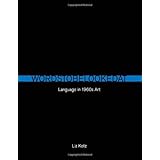
(More customer reviews)Are you looking to buy Words to Be Looked At: Language in 1960s Art? Here is the right place to find the great deals. we can offer discounts of up to 90% on Words to Be Looked At: Language in 1960s Art. Check out the link below:
>> Click Here to See Compare Prices and Get the Best Offers
Words to Be Looked At: Language in 1960s Art ReviewI've been reading Liz Kotz's book for many months and I still haven't plumbed its depths all the way to the bottom, however what I have made of it, I love. In its range and in the brilliance of its insights it reminds me a bit of Pamela Lee's Chronophobia book, which likewise was always coming and throwing delightful curves at the reader, though Kotz goes beyond Lee, or so I feel, in the arcane angles from which she pursues her subjects. She also has a lot more humor than Lee, which is all to the good. Kotz' thesis is--well, I can't boil it down here on Amazon since her arguments, like the mythical Hydra, are multi-headed, but she takes on the donnee of much contemporary art writing, that in the 1950s and 1960s language made enormous and telling inroads into the world of visual art, and she tries to account for this `turn towards language' by pursuing various cultural and historical markers. Simultaneously she shows that the process itself (the `turn') devolved into a `re-turn,' and the art became conscious of itself as being embroiled in a genre-churning mash-up. So there's all this activity, and some of it looks inward--and coupled with the social revolutions of the 1960s, there's a lot of ways in which anyone trying to make sense of all this material could go wrong, and Kotz evades every trap. You feel like cheering for her to succeed the way one cheered on D.B. Cooper's getaway after that hijack caper.Book begins with a consideration of John Cage's enigmatic 4'33" and its three scores. Kotz has a lot of fun about which one of the three is most canonical; in the end, we are led to agreeing with her that it doesn't matter, but that the resistance of critics to the so-called 1960 version is largely due to the fact that it is represented not in conventional musical terms, nor even by the familiar plunging graphics, but in words--humble but actual words (this is the one with the "Tacet"/"Silence" interchange that always strikes me as monastic. In any case working her way through conflicting claims, Kotz arrives at one of her most striking points, that after 1952, duration becomes one of the building blocks of art. Soon, Sol LeWitt is claiming to see that the idea becomes the machine that makes art, so that torques a little to reveal that the event is the machine that makes art. She tracks the progress of artists as different as Ashbery and Acconci through the 1960s, and winds up with a dazzling look at Warhol's novel "a" as the ultimate 60s durational work, a "project that must be undergone to be understood." Along the way she has a ball with the contemporary critics of "a," and I always love reading that sort of thing--Michael Sherry performed a similar analysis of contemporary reviews of Samuel Barber's Vanessa and Antony and Cleopatra in last year's Gay Artists in Modern American Culture: An Imagined Conspiracy. Really some of the same knuckleheads were involved in tearing apart both "a" and the "empty-mind" operas of Barber.
Hmm, makes me afraid that 40 years from now, the scholars of the future will be pouncing on all the 1 star reviews I've written for Amazon, and showing that the works of art I hated will be universally held up in 2049 as works of genius and I'm a fool. I know it's going to happen, and knowing I'll be dead by the time that happens doesn't make me less afraid for myself!Words to Be Looked At: Language in 1960s Art Overview"Book-ended by Cage's 4'33'' and Warhol's a: a novel, by 'silence' and'glossolalia', Liz Kotz's text tracks a hitherto uncharted trajectory in what sheterms "the turn to language" in vanguard art practices of the 1960s and70s. Kotz's nuanced probing of linguistic operations serving instrumental orinstructional ends and/or deployed as material entities illuminates an impressivelywide range of works in various fields from experimental music and poetry, to thevisual arts. Acutely attentive to that era's displacement of conventionalcategories, she constructs a network of cross disciplinary readings that freshlyparses the interrelationships of Fluxus, Conceptual, performance and post-minimalart works with concurrent disciplines."--Lynne Cooke, Curator, Dia ArtFoundation (Lynne Cooke, Dia Art Foundation )
Want to learn more information about Words to Be Looked At: Language in 1960s Art?
>> Click Here to See All Customer Reviews & Ratings Now

0 comments:
Post a Comment