Average Reviews:

(More customer reviews)Are you looking to buy Russian Talk: Culture and Conversation During Perestroika? Here is the right place to find the great deals. we can offer discounts of up to 90% on Russian Talk: Culture and Conversation During Perestroika. Check out the link below:
>> Click Here to See Compare Prices and Get the Best Offers
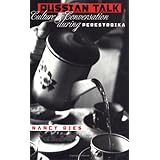
Russian Talk: Culture and Conversation During Perestroika ReviewRies's book has become one of the must-cite books among anthropologists working in Russia or the xSSR. This is one of the first, if not the first ethnographic work based on research in an urban setting. Anthropologists typically head to the tundra or the villages, but most Russians live in very large cities. She presents an ethnography of conversations, usually in the kitchen around drinking tea, which provides fascinating insights into the daily lives of urban people during perestroika. She includes an epilogue describing some of the changes after the fall of the Soviet Union.This is an ethnography, and not linguistic analysis or conversation analysis, so people looking for that kind of work may be disappointed. On the other hand, this is a book accessible to non-academics if you are willing to put in a little effort working through the subtle arguments.Russian Talk: Culture and Conversation During Perestroika OverviewSoulful, theatrical, intense: Russian talk is notably full of existential musing and dark passion. However, despite the widespread appreciation of Russian talk, no one has analyzed it as a form of cultural performance. As one of the first Western ethnographers to undertake fieldwork in Moscow, Nancy Ries did just that. In this pioneering study, she shows how everyday conversation shapes Russian identity and culture.Dire stories about poverty, hardship, and social decay recited constantly during perestroika served to fabricate a common worldview--conveying a sense of shared experience and destiny, and casting Russian society as an inescapable realm of absurdity and suffering. Ries agues that while these narratives aptly depicted the chaotic events of the time, they also comprised a kind of contemporary folklore, generic in their lamenting, portentous tones and their culturally poignant details.The story of a grandmother who stands in line all day in order to bring home a precious kilo of sugar becomes a parable of feminine self-sacrifice and endurance. Sardonic narratives about frustrated communal apartment dwellers pouring hot pepper in their neighbor's soup pot challenge the myth of camaraderie and express the proverbial notion that revenge is sweeter for Russians than reconciliation.This insightful ethnography suggests the enormous power that ordinary talk has, in any society, to shape social and political attitudes, and to produce distinctive cultural patterns.
Want to learn more information about Russian Talk: Culture and Conversation During Perestroika?
>> Click Here to See All Customer Reviews & Ratings Now

0 comments:
Post a Comment