Showing posts with label design patterns. Show all posts

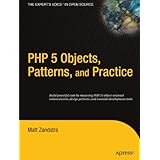
PHP 5 Objects, Patterns and Practice Review

PHP 5 Objects, Patterns and Practice
Average Reviews:

(More customer reviews)
Are you looking to buy PHP 5 Objects, Patterns and Practice? Here is the right place to find the great deals. we can offer discounts of up to 90% on PHP 5 Objects, Patterns and Practice. Check out the link below:

>> Click Here to See Compare Prices and Get the Best Offers

PHP 5 Objects, Patterns and Practice ReviewFact of the matter is that PHP5 is a serious enterprise level development system. This book takes it seriously and presents both practical and architectural material at a level that used to be reserved for J2EE and .NET works. This relatively short book is packed full of well written and insightful content. It stars with the basics of PHP5 OO programming with detail about the mistakes in PHP4 that have now been rectified. That is taken all the way through advanced topics like reflection.
The author then switches gears and gets into the design of object oriented applications. Now that we have the right tools, how we should use them to make better systems, right? UML is covered, and so are design patterns.
The later chapters of the book cover solid software engineering practices, like version control and unit testing, amongst other.
Not only will this book give you new ideas at a coding level, it will also open your mind as an engineer and get you headed in a direction toward architecture and large scale application design.
An excellent book. A must have for any serious PHP developer.PHP 5 Objects, Patterns and Practice OverviewPHP 5 Objects, Patterns, Practice is a practical design and management book. It explains object-oriented programming in PHP 5, the latest version of PHP. This book explores the principles underlying design patterns (principally those patterns collected by the 'Gang of Four') and presents a range of patterns in a PHP context. This book also examines tools and practices that exist which underpin good software design, including unit testing, documentation, version control and automated build.

Want to learn more information about PHP 5 Objects, Patterns and Practice?

>> Click Here to See All Customer Reviews & Ratings Now
Read More...

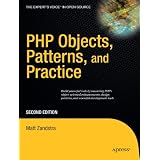
PHP Objects, Patterns, and Practice Review

PHP Objects, Patterns, and Practice
Average Reviews:

(More customer reviews)
Are you looking to buy PHP Objects, Patterns, and Practice? Here is the right place to find the great deals. we can offer discounts of up to 90% on PHP Objects, Patterns, and Practice. Check out the link below:

>> Click Here to See Compare Prices and Get the Best Offers

PHP Objects, Patterns, and Practice ReviewI've owned PHP Objects, Patterns, and Practice for over a year, and it's still one of those books I go back to. It's a well written, generally well executed book on what constitutes Object Oriented Programming in the PHP5 environment.
First, the good news:
This book is a crash course on OOP design and thought. It borrows heavily from two monumentous texts in the field - the Gang of Four's book, and Java Enterprise Patterns - and condences their essences into an easy to swallow form. The basics are all here: how to create well designed classes, how to instantiate objects, etc. There's a hidden gem in the introductory portion of the book: the Reflection API. This API is built into PHP, and gives the coder unparalleled access to the guts of the classes and objects in a given project. It definitely has its uses.
The patterns are all generally useful, with the only exception perhaps being the Interpreter pattern. I'm just not convinced that creating one's own command line interface syntax is necessary, given that PHP projects aren't usually interactive. It seems like something best left to an appendex, or extra web content.
Now, for the bad news:
Some sections of the book, especially some of the code examples, could've used a better editor. Small things, the kinds of things that can trip up inexperienced coders, crop up. Using private properties instead of protected. Using the wrong variable name between examples. That sort of thing.
There's also a lack of a satisfying conclusion, so-to-speak. Zandstra himself claims that generating objects is perhaps the hardest thing to demonstrate. Yet, most of his examples (excepting the patterns late in the book) are canned. Objects and classes exist only to drive the theory behind a pattern home. Few real world examples are given. Admittedly, some patterns are simple to transfer to a real project, but concrete examples of that nature could serve to further cement his point. For example, it's not difficult to see how the Composite pattern would work well for dealing with an XML document, but would there ever be a need for a Visitor object to act on one?
Finally, and in continuation of my last criticism, Zandstra never touches one of the things PHP is used the most for: form handling. Can forms be represented by classes? Could forms be generated by objects (perhaps using a Factory pattern)? What about form validators? Wouldn't the Strategy or Decorator pattern work? Supplementing his online Civilization game and CLI/quiz examples with this would've really put the book over the top.
Still, with that said, PHP Objects, Patterns, and Practice is still a text that gets far more right than wrong. It's definitely a must-buy for those PHP coders looking to write modular code.PHP Objects, Patterns, and Practice OverviewPHP is the most popular web development language in the world, used to power over 20 million websites (Source: Netcraft - http://www.php.net/usage.php). With corporate adoption on the rise, and companies such as Oracle, IBM, Zend, and even Microsoft devoting increasing resources to the language, books such as PHP Objects, Patterns, and Practice, Second Edition will be in strong demand for the foreseeable future.PHP Objects, Patterns, and Practice, Second Edition shows you how to meld the power of PHP with the sound enterprise development techniques embraced by professional programmers. Going well beyond the basics of object-oriented development, you'll learn about advanced topics such as working with static methods and properties, abstract classes, interfaces, design patterns, exception handling, and more. You'll also be exposed to key tools such as PEAR, CVS, Phing, and phpDocumentor.See the following resources for more on enterprise adoption/interest in PHP:http://www.infoworld.com/article/06/10/31/HNzenphp_1.htmlhttp://www.oracle.com/technology/tech/php/http://www.zend.com/company/customers

Want to learn more information about PHP Objects, Patterns, and Practice?

>> Click Here to See All Customer Reviews & Ratings Now
Read More...

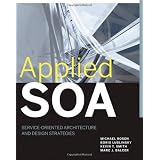
Applied SOA: Service-Oriented Architecture and Design Strategies Review

Applied SOA: Service-Oriented Architecture and Design Strategies
Average Reviews:

(More customer reviews)
Are you looking to buy Applied SOA: Service-Oriented Architecture and Design Strategies? Here is the right place to find the great deals. we can offer discounts of up to 90% on Applied SOA: Service-Oriented Architecture and Design Strategies. Check out the link below:

>> Click Here to See Compare Prices and Get the Best Offers

Applied SOA: Service-Oriented Architecture and Design Strategies ReviewI found this book valuable for providing a solid approach to designing service oriented architectures. It is important for people to understand that this book does not focus on implementing web services - there are plenty of other books that do that. This book focuses on the hard parts - how to design an architecture around the concept of services.
This book is also not a "cookbook" - it does not offer easy answers to these tough problems. Instead it walks you through the thought process so you can learn how to come up with the right answers yourself.
I am actively using this book to help my customers get started with SOA and to help them avoid common design pitfalls. My favorite chapter is Chapter 9: Using Services to Build Enterprise Solutions. The distinction between today's monolothic applications and tomorrow's composite applications requires a paradigm shift that the authors express well.
Finally, I especially liked the practical approach, practical steps and practical advice continually peppered throughout the entire book.Applied SOA: Service-Oriented Architecture and Design Strategies Overview
Endorsed by all major vendors (Microsoft, Oracle, IBM, and SAP), SOA has quickly become the industry standard for building next-generation software; this practical guide shows readers how to achieve the many benefits of SOA
Begins with a look at the architectural principles needed to create successful applications and then goes on to examine the process for designing services and SOA implementations
Each stage of the design process has an accompanying chapter that walks readers through the details and provides helpful tips, techniques, and examples
The author team of SOA practitioners also provides two unique, comprehensive, end-to-end case studies illustrating the architectural and design techniques presented in the book


Want to learn more information about Applied SOA: Service-Oriented Architecture and Design Strategies?

>> Click Here to See All Customer Reviews & Ratings Now
Read More...

Design Patterns in Ruby Review

Design Patterns in Ruby
Average Reviews:

(More customer reviews)
Are you looking to buy Design Patterns in Ruby? Here is the right place to find the great deals. we can offer discounts of up to 90% on Design Patterns in Ruby. Check out the link below:

>> Click Here to See Compare Prices and Get the Best Offers

Design Patterns in Ruby ReviewWarning: This book is not a reference!!!
Well, it could be but it probably won't need to be as each concept is explained so well that you will remember when to apply this pattern or that pattern for every situation. The author is engaging and funny making this quite a book turner for a technical book. I almost read half the book on the 2 hour commuter flight between Perth and Karatha. Every chapter starts with a little anectode about the author's past life events and how these are related to the use of a particular pattern. The examples are well thought out and the author also discusses Ruby specific implementation details as well as providing valuable insights into how each pattern is used in the existing Ruby codebase.
I come from a Python/C/C++/Java background and have been tinkering around with ruby for a while but without really "getting it" and understanding what the fuss was about. The same could be said about design patterns. After reading this book I have finally grokked, not only Ruby but the value and power of design patterns. I can now say that I truly understand exactly why there is such a hype about Ruby. The whole method_missing thing, singleton support, ability to clone classes, etc. This language really represents the future of programming - today - and this book delivers on its intent.
This is simply one of the best technical books that I have read in a long time and I thoroughly recommend it, especially for an intermediate Ruby programmer and even those who know OO concepts and principles but may be new to Ruby.Design Patterns in Ruby Overview
Praise for Design Patterns in Ruby

"Design Patterns in Ruby documents smart ways to resolve many problems that Ruby developers commonly encounter. Russ Olsen has done a great job of selecting classic patterns and augmenting these with newer patterns that have special relevance for Ruby. He clearly explains each idea, making a wealth of experience available to Ruby developers for their own daily work."

—Steve Metsker, Managing Consultant with Dominion Digital, Inc.

"This book provides a great demonstration of the key 'Gang of Four' design patterns without resorting to overly technical explanations. Written in a precise, yet almost informal style, this book covers enough ground that even those without prior exposure to design patterns will soon feel confident applying them using Ruby. Olsen has done a great job to make a book about a classically 'dry' subject into such an engaging and even occasionally humorous read."

—Peter Cooper

"This book renewed my interest in understanding patterns after a decade of good intentions. Russ picked the most useful patterns for Ruby and introduced them in a straightforward and logical manner, going beyond the GoF's patterns. This book has improved my use of Ruby, and encouraged me to blow off the dust covering the GoF book."

—Mike Stok

"Design Patterns in Ruby is a great way for programmers from statically typed objectoriented languages to learn how design patterns appear in a more dynamic, flexible language like Ruby."

—Rob Sanheim, Ruby Ninja, Relevance

Most design pattern books are based on C++ and Java. But Ruby is different—and the language's unique qualities make design patterns easier to implement and use. In this book, Russ Olsen demonstrates how to combine Ruby's power and elegance with patterns, and write more sophisticated, effective software with far fewer lines of code.

After reviewing the history, concepts, and goals of design patterns, Olsen offers a quick tour of the Ruby language—enough to allow any experienced software developer to immediately utilize patterns with Ruby. The book especially calls attention to Ruby features that simplify the use of patterns, including dynamic typing, code closures, and "mixins" for easier code reuse.

Fourteen of the classic "Gang of Four" patterns are considered from the Ruby point of view, explaining what problems each pattern solves, discussing whether traditional implementations make sense in the Ruby environment, and introducing Ruby-specific improvements. You'll discover opportunities to implement patterns in just one or two lines of code, instead of the endlessly repeated boilerplate that conventional languages often require.

Design Patterns in Ruby also identifies innovative new patterns that have emerged from the Ruby community. These include ways to create custom objects with metaprogramming, as well as the ambitious Rails-based "Convention Over Configuration" pattern, designed to help integrate entire applications and frameworks.

Engaging, practical, and accessible, Design Patterns in Ruby will help you build better software while making your Ruby programming experience more rewarding.


Want to learn more information about Design Patterns in Ruby?

>> Click Here to See All Customer Reviews & Ratings Now
Read More...