Showing posts with label information systems. Show all posts

MySQL 5.0 Certification Study Guide Review

MySQL 5.0 Certification Study Guide
Average Reviews:

(More customer reviews)
Are you looking to buy MySQL 5.0 Certification Study Guide? Here is the right place to find the great deals. we can offer discounts of up to 90% on MySQL 5.0 Certification Study Guide. Check out the link below:

>> Click Here to See Compare Prices and Get the Best Offers

MySQL 5.0 Certification Study Guide ReviewQuite simply, this book should be on the shelf of anyone who intends to take the MySQL Certification exams.
The book was written by Paul DuBois, certainly the top author of MySQL related books. Paul's style is very readable and the book provides extensive coverage of the exam material.
In fact, the book is so extensive because it was written not only by Paul, but by Carsten Pedersen, certification manager at MySQL AB. The book was written by the people who created the exam, and it shows. I can tell you right now that if you read the certification study guide and know its content, you will pass the certification exam. There is not a question on the exam that is not covered by this study guide.
The exercises are good, though not always formatted the same as what you will encounter on the actual exam. Doing the exercises should reveal how well you understand a given topic in the guide.
Here's an overview of what the book covers:
* MySQL and MySQL AB
* MySQL Software
* Using MySQL Client Programs
* Data Definition Language
* The SELECT Statement
* Basic SQL
* Update Statements
* Joins
* Importing and Exporting Data
* MySQL Architecture
* MySQL Installation and Configuration
* Security Issues
* Optimizing for Query Speed
* MyISAM Tables
* InnoDB Tables
* Advanced Server Features
Finally, here is the best part about the MySQL Certification Study Guide: it's free. In the back of the guide is a voucher code for 25% off the cost of a certification exam, or roughly the price of the book. If you are serious about taking the MySQL Certification exams, you can't go wrong with this book.MySQL 5.0 Certification Study Guide OverviewThis is the official guide to passing the two MySQL certification tests for MySQL 5, the long-awaited major revision of MySQL. The number of MySQL certification exams taken has doubled in the last six months.Certcities.com lists the MySQL certification as one of the top 10 certifications to grow in 2005. MySQL professionals need a way to distinguish themselves from the vast majority of database administrators and developers. With more than 4 million active installations, MySQL is the world's most popular open-source database. Known for its speed, reliability and case of use, MySQL has become a low-cost alternative to expensive database systems such as Oracle, IBM and Microsoft. MySQL AB has aggressively improved the feature set of MySQL with MySQL 5, making it more suitable for enterprise-level applications and uses. The MySQL certification tests, available at over 3,000 PearsonVUE testing centers, is a key component of this enterprise growth strategy, establishing a base level of skills for database users, administrators and programmers.The MySQL Core Certification is aimed at the database user who wants proof of his or her abilities in such fundamental areas as SQL, data entry and maintenance, and data extraction. The MySQL Professional Certification test is designed for the advanced user who wants to prove his or her knowledge in such areas as database management, installation, security, disaster prevention and optimization. Both tests are thoroughly covered in the MySQL 5.0 Certification Study Guide. Written by Paul DuBois, the leading author of books on MySQL topics, and reviewed for technical accuracy by MySQL AB, this book is the fastest, most reliable way for MySQL users, developers, and administrators to prepare for either of the MySQL tests.

Want to learn more information about MySQL 5.0 Certification Study Guide?

>> Click Here to See All Customer Reviews & Ratings Now
Read More...

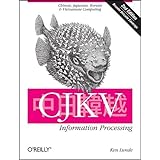
CJKV Information Processing: Chinese, Japanese, Korean & Vietnamese Computing Review

CJKV Information Processing: Chinese, Japanese, Korean and Vietnamese Computing
Average Reviews:

(More customer reviews)
Are you looking to buy CJKV Information Processing: Chinese, Japanese, Korean & Vietnamese Computing? Here is the right place to find the great deals. we can offer discounts of up to 90% on CJKV Information Processing: Chinese, Japanese, Korean & Vietnamese Computing. Check out the link below:

>> Click Here to See Compare Prices and Get the Best Offers

CJKV Information Processing: Chinese, Japanese, Korean & Vietnamese Computing ReviewThe previous edition of this book was so useful that I had two copies, one at work and one at home. I work in Chinese, Japanese, and Korean, and the previous edition, which only claimed to cover Japanese, was still the most useful book on Chinese and Korean info processing that I ever found. With this new edition, the author has extended coverage to all Asian languages that use Chinese characters, or used to do so in the case of Vietnamese, as part of their writing systems.
Thank goodness he has. The author, Ken Lunde, has an encyclopedic knowledge of this material. In addition, he is one of those people to whom anything less than strict, literal correctness is intolerable. Authors of this sort usually write in a style reminiscent of the federal tax code. Lunde manages to avoid this, creating one of those rare and delightful computer books that serve as a lucid tutorial the first time through, and as a strict and comprehensive reference thereafter.
The principal reason I consider this book the bible for Asian language information processing is the extreme difficulty of getting most of this information via any other source. In fact, I'd be hard pressed to think of another computer book whose original source material is as scattered, poorly documented, and often unreliable as that Lunde had to gather to produce this book. His job of ferreting out the details, cross-checking, error correction, and organization into a single book makes this almost a work of journalism. If you do CJKV work, you'll need more than just this book, of course, but the book is full of references to other material, so this is the place to start.
Lunde also provides a lot of usable source code in the book. This is not unusual in a computer book, but this code is special in two ways. First, it's available in C, Java, and Perl, not just in C. This is refreshing, given the increasingly prominent roles played by Java and Perl on the Internet--the place where multilingual computing arguably matters most.
Second, his code serves as a great checklist for what has to be done by any similar code. This is one of those difficult types of programming where many bugs aren't easy to see, because of the large number of obscure "gotchas" and arcane details. Lunde doesn't miss much, and he revels in these arcane details. His code is not highly optimized, and he admits as much, but if his code does something, you need to do it, and if it doesn't, you (probably) don't need to, either. This fact alone justifies the cost of the book for any developer to whom bugs might have financial consequences.
If you're going to do CJKV work, this is the bible. As I said, it's not the only thing you'll need, but it's where you should start.CJKV Information Processing: Chinese, Japanese, Korean & Vietnamese Computing Overview
First published a decade ago, CJKV Information Processing quickly became the unsurpassed source of information on processing text in Chinese, Japanese, Korean, and Vietnamese. It has now been thoroughly updated to provide web and application developers with the latest techniques and tools for disseminating information directly to audiences in East Asia. This second edition reflects the considerable impact that Unicode, XML, OpenType, and newer operating systems such as Windows XP, Vista, Mac OS X, and Linux have had on East Asian text processing in recent years. Written by its original author, Ken Lunde, a Senior Computer Scientist in CJKV Type Development at Adobe Systems, this book will help you:


Learn about CJKV writing systems and scripts, and their transliteration methods
Explore trends and developments in character sets and encodings, particularly Unicode
Examine the world of typography, specifically how CJKV text is laid out on a page
Learn information-processing techniques, such as code conversion algorithms and how to apply them using different programming languages
Process CJKV text using different platforms, text editors, and word processors
Become more informed about CJKV dictionaries, dictionary software, and machine translation software and services
Manage CJKV content and presentation when publishing in print or for the Web

Internationalizing and localizing applications is paramount in today's global market -- especially for audiences in East Asia, the fastest-growing segment of the computing world. CJKV Information Processing will help you understand how to develop web and other applications effectively in a field that many find difficult to master.


Want to learn more information about CJKV Information Processing: Chinese, Japanese, Korean & Vietnamese Computing?

>> Click Here to See All Customer Reviews & Ratings Now
Read More...

Geographic Information Systems: Applications in Natural Resource Management Review

Geographic Information Systems: Applications in Natural Resource Management
Average Reviews:

(More customer reviews)
Are you looking to buy Geographic Information Systems: Applications in Natural Resource Management? Here is the right place to find the great deals. we can offer discounts of up to 90% on Geographic Information Systems: Applications in Natural Resource Management. Check out the link below:

>> Click Here to See Compare Prices and Get the Best Offers

Geographic Information Systems: Applications in Natural Resource Management ReviewIf you want to learn about GIS in a natural resource aspect this book is perfect. Gives step-by-step instructions on how to do things.Geographic Information Systems: Applications in Natural Resource Management OverviewGeographic Information Systems: Applications in Natural Resource Management is intended for introductory-course students in forestry and natural resource management, field forestry, biology, and other natural resource or natural resource-related fields. The emphasis of this book is on the application of Geographic Information systems (GIS). It provides detailed coverage of GIS operations such as querying, buffering, clipping, and overlay analysis; as well as background information on the history of GIS, database creation, editing and acquisition, and map development. The applications provided can be extended to any region of the world, although the primary emphasis is on Canada and the rest of North America. This book also examines current GIS trends and the opportunities and challenges likely to face GIS users.

Want to learn more information about Geographic Information Systems: Applications in Natural Resource Management?

>> Click Here to See All Customer Reviews & Ratings Now
Read More...