Showing posts with label computational linguistics. Show all posts

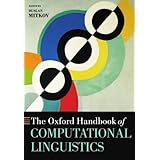
The Oxford Handbook of Computational Linguistics (Oxford Handbooks) Review

The Oxford Handbook of Computational Linguistics (Oxford Handbooks)
Average Reviews:

(More customer reviews)
Are you looking to buy The Oxford Handbook of Computational Linguistics (Oxford Handbooks)? Here is the right place to find the great deals. we can offer discounts of up to 90% on The Oxford Handbook of Computational Linguistics (Oxford Handbooks). Check out the link below:

>> Click Here to See Compare Prices and Get the Best Offers

The Oxford Handbook of Computational Linguistics (Oxford Handbooks) ReviewThis `handbook' needs both hands to lift it! At 700+ pages and 38 chapters, detailed chapter-by-chapter review is impossible. Let me start with the top-level structure, which divides the book into three parts: Fundamentals; Processes, Methods and Resources; and Applications.
Part one, `Fundamentals', walks through the standard sub-disciplines of computational linguistics with chapter headings: phonology, morphology, lexicography, syntax, semantics, discourse, pragmatics and dialogue, formal grammars and languages, complexity theory. Each chapter is a short introduction and overview to the topic, aimed at the informed newcomer (i.e. it helps if you have a computer science/maths background and know about predicate logic and state machines).
Part two, `Processes, etc', covers a number of problem areas and techniques: text-segmentation, part-of-speech tagging, parsing, word-sense disambiguation, anaphora resolution, natural language generation and so on. There is little commonality between the chapters, but they are all informative.
The final part, `Applications' covers areas such as machine translation, information retrieval, text summarisation, second-language computer-assisted learning systems and spoken dialogue systems.
As a comprehensive, and relatively recent review of the whole field the book is excellent. Some points which caught my interest.
1. Speech and written language are hugely different, due to noise, self-repair, speech acts and discourse functions, accents and the strange `grammaticality' of utterances (p. 521).
2. The distinction between simpler finite-state dialogue models (machine-centric) vs. more dynamic planning-based dialogue managers (which can deal with mixed-initiative dialogue) - chapter 7.
3. The controversial role of real-world knowledge. This is different from semantics, which is more about representational and inferential adequacy. Chapter 25 on Ontologies surprising states "it is not clear to what extent NLP technology, in its current form, needs such ontologies and their complex knowledge representation systems". Apparently "large scale vocabularies with very limited reasoning are preferred". Interesting.
Human-to-human conversation seems, in performance, to be a unitary phenomenon. For scientific purposes, however, it has to be analysed into sub-fields, as in the chapter headings of part one. However, there is then both the problem of tunnel vision, and of scope creep: we see, for example, syntactic approaches expanding into the spaces of semantics and pragmatics in, to my mind, an unbalanced way.
I was most interested in Spoken Dialogue Systems, as these attempt to combine the state of the art in the separate disciplines into a unified architecture and implementation to address the original problem: a powerful constraint on one-sided development. The solution architectures seem to show that modular works, with bottom-up statistical techniques performing well at the speech-recognition level, and symbolic processing techniques such as automatic planning to achieve agent goals working at the dialogue level. The latter seems to be the least developed, however, as linguistics merges into a more general social agent theory.
The Oxford Handbook of Computational Linguistics (Oxford Handbooks) OverviewThirty-eight chapters, commissioned from experts all over the world, describe major concepts, methods, and applications in computational linguistics. Part I, Linguistic Fundamentals, provides an overview of the field suitable for senior undergraduates and non-specialists from other fields of linguistics and related disciplines. Part II describes current tasks, techniques, and tools in Natural Language Processing and aims to meet the needs of post-doctoral workers and others embarking on computational language research. Part III surveys current Applications. The book is a state-of-the-art reference to one of the most active and productive fields in linguistics. It will be of interest and practical use to a wide range of linguists, as well as to researchers in such fields as informatics, artificial intelligence, language engineering, and cognitive science.

Want to learn more information about The Oxford Handbook of Computational Linguistics (Oxford Handbooks)?

>> Click Here to See All Customer Reviews & Ratings Now
Read More...

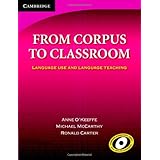
From Corpus to Classroom: Language Use and Language Teaching (Cambridge Language Teaching Library) Review

From Corpus to Classroom: Language Use and Language Teaching (Cambridge Language Teaching Library)
Average Reviews:

(More customer reviews)
Are you looking to buy From Corpus to Classroom: Language Use and Language Teaching (Cambridge Language Teaching Library)? Here is the right place to find the great deals. we can offer discounts of up to 90% on From Corpus to Classroom: Language Use and Language Teaching (Cambridge Language Teaching Library). Check out the link below:

>> Click Here to See Compare Prices and Get the Best Offers

From Corpus to Classroom: Language Use and Language Teaching (Cambridge Language Teaching Library) ReviewIt is easy to read with lots of examples. Gives planty of ideas if you are interested in corpus study.From Corpus to Classroom: Language Use and Language Teaching (Cambridge Language Teaching Library) OverviewFrom Corpus to Classroom summarises and makes accessible recent work in corpus research, focusing particularly on spoken data. It is based on analysis of corpora such as CANCODE and Cambridge International Corpus, and written with particular reference to the development of corpus-informed pedagogy.The book explains how corpora can be designed and used, and focuses on what they tell us about language teaching. It examines the relevance of corpora to materials writers, course designers and language teachers and considers the needs of the learner in relation to authentic data. It shows how the answers to key questions such as 'Is there a basic, everyday vocabulary for English?', 'How should idioms be taught?' and 'What are the most common spoken language chunks?' are best explored by means of a clearer understanding of the workings of language in context.

Want to learn more information about From Corpus to Classroom: Language Use and Language Teaching (Cambridge Language Teaching Library)?

>> Click Here to See All Customer Reviews & Ratings Now
Read More...

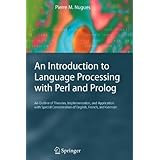
An Introduction to Language Processing with Perl and Prolog: An Outline of Theories, Implementation, and Application with Special Consideration of English, French, and German (Cognitive Technologies) Review

An Introduction to Language Processing with Perl and Prolog: An Outline of Theories, Implementation, and Application with Special Consideration of English, French, and German (Cognitive Technologies)
Average Reviews:

(More customer reviews)
Are you looking to buy An Introduction to Language Processing with Perl and Prolog: An Outline of Theories, Implementation, and Application with Special Consideration of English, French, and German (Cognitive Technologies)? Here is the right place to find the great deals. we can offer discounts of up to 90% on An Introduction to Language Processing with Perl and Prolog: An Outline of Theories, Implementation, and Application with Special Consideration of English, French, and German (Cognitive Technologies). Check out the link below:

>> Click Here to See Compare Prices and Get the Best Offers

An Introduction to Language Processing with Perl and Prolog: An Outline of Theories, Implementation, and Application with Special Consideration of English, French, and German (Cognitive Technologies) ReviewThis book has the same scope as Speech and Language Processing (2nd Edition) (Prentice Hall Series in Artificial Intelligence), but that book flies too high over the details. This book does a good job of covering the details without getting lost in them. The author takes the approach of explaining a concept first with excellent illustrations, then explains the algorithm that implements the concept, then shows detailed code in either Prolog or PERL.
This is not to say you can pick up this book without the proper background and get much out of it. Language processing is a field requiring a good background in a number of fields including the theory of computation, linguistics, artificial intelligence, and information theory to name a few. You should be familiar with all of these fields before tackling the book, although the author does introduce these topics somewhat before digging into details.
One thing the author does not do much of is explain Prolog or PERL. He assumes you already know these languages, although there is an appendix at the back of the book covering Prolog. Prolog is a difficult language to learn and is not at all intuitive. However, it is an excellent choice for coding up many algorithms concerning artificial intelligence. Thus, although I do not argue with the author's choice of language, I do recommend that you become fluent in Prolog before you read this book.
I used to recommend Jurafsky and Martin for people starting out learning language processing, but now I think I can recommend this book for not only the big picture but the details of this interesting field as well.An Introduction to Language Processing with Perl and Prolog: An Outline of Theories, Implementation, and Application with Special Consideration of English, French, and German (Cognitive Technologies) OverviewThis book teaches the principles of natural language processing and covers linguistics issues. It also details the language-processing functions involved, including part-of-speech tagging using rules and stochastic techniques. A key feature of the book is the author's hands-on approach throughout, with extensive exercises, sample code in Prolog and Perl, and a detailed introduction to Prolog. The book is suitable for researchers and students of natural language processing and computational linguistics.

Want to learn more information about An Introduction to Language Processing with Perl and Prolog: An Outline of Theories, Implementation, and Application with Special Consideration of English, French, and German (Cognitive Technologies)?

>> Click Here to See All Customer Reviews & Ratings Now
Read More...

Foundations of Statistical Natural Language Processing Review

Foundations of Statistical Natural Language Processing
Average Reviews:

(More customer reviews)
Are you looking to buy Foundations of Statistical Natural Language Processing? Here is the right place to find the great deals. we can offer discounts of up to 90% on Foundations of Statistical Natural Language Processing. Check out the link below:

>> Click Here to See Compare Prices and Get the Best Offers

Foundations of Statistical Natural Language Processing ReviewThis is the best book I've ever read on computational linguistics. It should be ideal for both linguists who want to learn about statistical language processing and those building language applications who want to learn about linguistics. This book isn't even published and it's now my most highly used reference book, joining gems such as Cormen, Leiserson and Rivest's algorithm book, Quirk et al.'s English Grammar, and Andrew Gelman's Bayesian statistics book (three excellent companions to this book, by the way).
The book is written more like a computer science or math book in that it starts absolutely from scratch, but moves quickly and assumes a sophisticated reader. The first one hundred or so pages provide background in probability, information theory and linguistics.
This book covers (almost) every current trend in NLP from a statistical perspective: syntactic tagging, sense disambiguation, parsing, information retrieval, lexical subcategorization, Hidden Markov Models, and probabilistic context-free grammars. It also covers machine translation and information retrieval in later chapters.
It covers all the statistical techniques used in NLP from Bayes' law through to maximum entropy modeling, clustering: nearest neighbors and decision trees, and much more.
What you won't find is information on applications to higher-level discourse and dialogue phenomena like pronoun resolution or speech act classification.Foundations of Statistical Natural Language Processing OverviewStatistical approaches to processing natural language text have becomedominant in recent years. This foundational text is the first comprehensiveintroduction to statistical natural language processing (NLP) to appear. The bookcontains all the theory and algorithms needed for building NLP tools. It providesbroad but rigorous coverage of mathematical and linguistic foundations, as well asdetailed discussion of statistical methods, allowing students and researchers toconstruct their own implementations. The book covers collocation finding, word sensedisambiguation, probabilistic parsing, information retrieval, and otherapplications.

Want to learn more information about Foundations of Statistical Natural Language Processing?

>> Click Here to See All Customer Reviews & Ratings Now
Read More...

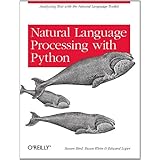
Natural Language Processing with Python Review

Natural Language Processing with Python
Average Reviews:

(More customer reviews)
Are you looking to buy Natural Language Processing with Python? Here is the right place to find the great deals. we can offer discounts of up to 90% on Natural Language Processing with Python. Check out the link below:

>> Click Here to See Compare Prices and Get the Best Offers

Natural Language Processing with Python ReviewThis book really delivers when it comes to code. It starts with simple tasks using the Python NLTK (Natural Language Toolkit) and builds up from there, teaching you a little bit of Python, a little bit of NLP theory, and delivering much in the way of useful applications. The author takes the time to explain the code and what is going on behind the scenes. He starts with extracting explicit words from documents and builds on that until at the end of the book you are analyzing sentence structure and building feature-based grammars.
This is not, however, an introduction to either the mathematics or information theory of natural language processing. It is not even a tutorial on Python. The book's sole purpose is to help you solve real problems using a common language without necessarily understanding the theory or the language you are using. If you really want to understand Python I suggest Learning Python. It's not as interestng as this book, but it gets the job done. To understand the theory behind natural language processing and also see how algorithms are coded up I suggest An Introduction to Language Processing with Perl and Prolog: An Outline of Theories, Implementation, and Application with Special Consideration of English, French, and German (Cognitive Technologies).
As for this book, I think it makes a great supplement to the other books I mention and also as a recipe book of solutions to real-world problems. I really don't think it is a gentle introduction to Speech and Language Processing (2nd Edition) (Prentice Hall Series in Artificial Intelligence), as it claims to be in the preface. Currently the table of contents is not listed in the product description. I include that next for your convenience:

Chapter 1. Language Processing and Python
Section 1.1. Computing with Language: Texts and Words
Section 1.2. A Closer Look at Python: Texts as Lists of Words
Section 1.3. Computing with Language: Simple Statistics
Section 1.4. Back to Python: Making Decisions and Taking Control
Section 1.5. Automatic Natural Language Understanding
Section 1.6. Summary
Section 1.7. Further Reading
Section 1.8. Exercises
Chapter 2. Accessing Text Corpora and Lexical Resources
Section 2.1. Accessing Text Corpora
Section 2.2. Conditional Frequency Distributions
Section 2.3. More Python: Reusing Code
Section 2.4. Lexical Resources
Section 2.5. WordNet
Section 2.6. Summary
Section 2.7. Further Reading
Section 2.8. Exercises
Chapter 3. Processing Raw Text
Section 3.1. Accessing Text from the Web and from Disk
Section 3.2. Strings: Text Processing at the Lowest Level
Section 3.3. Text Processing with Unicode
Section 3.4. Regular Expressions for Detecting Word Patterns
Section 3.5. Useful Applications of Regular Expressions
Section 3.6. Normalizing Text
Section 3.7. Regular Expressions for Tokenizing Text
Section 3.8. Segmentation
Section 3.9. Formatting: From Lists to Strings
Section 3.10. Summary
Section 3.11. Further Reading
Section 3.12. Exercises
Chapter 4. Writing Structured Programs
Section 4.1. Back to the Basics
Section 4.2. Sequences
Section 4.3. Questions of Style
Section 4.4. Functions: The Foundation of Structured Programming
Section 4.5. Doing More with Functions
Section 4.6. Program Development
Section 4.7. Algorithm Design
Section 4.8. A Sample of Python Libraries
Section 4.9. Summary
Section 4.10. Further Reading
Section 4.11. Exercises
Chapter 5. Categorizing and Tagging Words
Section 5.1. Using a Tagger
Section 5.2. Tagged Corpora
Section 5.3. Mapping Words to Properties Using Python Dictionaries
Section 5.4. Automatic Tagging
Section 5.5. N-Gram Tagging
Section 5.6. Transformation-Based Tagging
Section 5.7. How to Determine the Category of a Word
Section 5.8. Summary
Section 5.9. Further Reading
Section 5.10. Exercises
Chapter 6. Learning to Classify Text
Section 6.1. Supervised Classification
Section 6.2. Further Examples of Supervised Classification
Section 6.3. Evaluation
Section 6.4. Decision Trees
Section 6.5. Naive Bayes Classifiers
Section 6.6. Maximum Entropy Classifiers
Section 6.7. Modeling Linguistic Patterns
Section 6.8. Summary
Section 6.9. Further Reading
Section 6.10. Exercises
Chapter 7. Extracting Information from Text
Section 7.1. Information Extraction
Section 7.2. Chunking
Section 7.3. Developing and Evaluating Chunkers
Section 7.4. Recursion in Linguistic Structure
Section 7.5. Named Entity Recognition
Section 7.6. Relation Extraction
Section 7.7. Summary
Section 7.8. Further Reading
Section 7.9. Exercises
Chapter 8. Analyzing Sentence Structure
Section 8.1. Some Grammatical Dilemmas
Section 8.2. What's the Use of Syntax?
Section 8.3. Context-Free Grammar
Section 8.4. Parsing with Context-Free Grammar
Section 8.5. Dependencies and Dependency Grammar
Section 8.6. Grammar Development
Section 8.7. Summary
Section 8.8. Further Reading
Section 8.9. Exercises
Chapter 9. Building Feature-Based Grammars
Section 9.1. Grammatical Features
Section 9.2. Processing Feature Structures
Section 9.3. Extending a Feature-Based Grammar
Section 9.4. Summary
Section 9.5. Further Reading
Section 9.6. Exercises
Chapter 10. Analyzing the Meaning of Sentences
Section 10.1. Natural Language Understanding
Section 10.2. Propositional Logic
Section 10.3. First-Order Logic
Section 10.4. The Semantics of English Sentences
Section 10.5. Discourse Semantics
Section 10.6. Summary
Section 10.7. Further Reading
Section 10.8. Exercises
Chapter 11. Managing Linguistic Data
Section 11.1. Corpus Structure: A Case Study
Section 11.2. The Life Cycle of a Corpus
Section 11.3. Acquiring Data
Section 11.4. Working with XML
Section 11.5. Working with Toolbox Data
Section 11.6. Describing Language Resources Using OLAC Metadata
Section 11.7. Summary
Section 11.8. Further Reading
Section 11.9. ExercisesNatural Language Processing with Python Overview
This book offers a highly accessible introduction to natural language processing, the field that supports a variety of language technologies, from predictive text and email filtering to automatic summarization and translation. With it, you'll learn how to write Python programs that work with large collections of unstructured text. You'll access richly annotated datasets using a comprehensive range of linguistic data structures, and you'll understand the main algorithms for analyzing the content and structure of written communication. Packed with examples and exercises, Natural Language Processing with Python will help you:

Extract information from unstructured text, either to guess the topic or identify "named entities"
Analyze linguistic structure in text, including parsing and semantic analysis
Access popular linguistic databases, including WordNet and treebanks
Integrate techniques drawn from fields as diverse as linguistics and artificial intelligence
This book will help you gain practical skills in natural language processing using the Python programming language and the Natural Language Toolkit (NLTK) open source library. If you're interested in developing web applications, analyzing multilingual news sources, or documenting endangered languages -- or if you're simply curious to have a programmer's perspective on how human language works -- you'll find Natural Language Processing with Python both fascinating and immensely useful.

Want to learn more information about Natural Language Processing with Python?

>> Click Here to See All Customer Reviews & Ratings Now
Read More...