Showing posts with label cognitive science. Show all posts

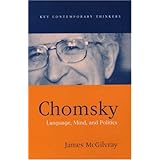
Chomsky: Language, Mind, and Politics (Key Contemporary Thinkers) Review

Chomsky: Language, Mind, and Politics (Key Contemporary Thinkers)
Average Reviews:

(More customer reviews)
Are you looking to buy Chomsky: Language, Mind, and Politics (Key Contemporary Thinkers)? Here is the right place to find the great deals. we can offer discounts of up to 90% on Chomsky: Language, Mind, and Politics (Key Contemporary Thinkers). Check out the link below:

>> Click Here to See Compare Prices and Get the Best Offers

Chomsky: Language, Mind, and Politics (Key Contemporary Thinkers) ReviewThis book gives a good overview of much of Chomsky's life work in linguistics, philosophy and politics. What it is not is an introduction into those topics, but neither is it written in a style that is overly academic. McGilvray seeks to integrate Chomsky's linguistic and political work somewhat and with a small amount of success, suggesting that they are intertwined and of course they are to a vague degree. That angle is interesting in its own way, but luckily the author does not force his hypothesis too much, instead he does a rather good job of overviewing and summarizing the main emphases of Chomsky's work in a cohesive and enlightening fashion. Probably not a necessary read for those who have read a lot of Chomsky's own works in both fields, but for those who haven't, or for people who simply enjoy reading in politics, philosophy and/or linguistics this book should make for interesting study.Chomsky: Language, Mind, and Politics (Key Contemporary Thinkers) OverviewThe key to Chomsky's overall intellectual project lies in what he has to say about a biologically based human nature.

Want to learn more information about Chomsky: Language, Mind, and Politics (Key Contemporary Thinkers)?

>> Click Here to See All Customer Reviews & Ratings Now
Read More...

The Stuff of Thought: Language as a Window into Human Nature Review

The Stuff of Thought: Language as a Window into Human Nature
Average Reviews:

(More customer reviews)
Are you looking to buy The Stuff of Thought: Language as a Window into Human Nature? Here is the right place to find the great deals. we can offer discounts of up to 90% on The Stuff of Thought: Language as a Window into Human Nature. Check out the link below:

>> Click Here to See Compare Prices and Get the Best Offers

The Stuff of Thought: Language as a Window into Human Nature ReviewThe Stuff of Thought: Language as a Window into Human Nature by Steven Pinker
Is there a difference between the meanings of these two sentences?
(1) Hal loaded hay into the wagon, and,
(2) Hal loaded the wagon with hay.
Well, Steven Pinker claims there is a difference and it's a difference that reveals something about the way the mind conceptualizes experience. That is "the stuff of thought" with which Pinker's latest book is concerned, and this "stuff," as he convincingly demonstrates, can be made accessible through a careful analysis of "the stuff of language," i.e., word categories and their syntactic habitats.
In the case of the two sentences above, we can see the human capacity to frame events in alternate ways through the dual function of verbs like "load." This verb draws attention to the hay and its movement in the first sentence, but to the transformation (a kind of metaphorical "movement") of the wagon in the second.
That children can learn the dual use of "load" and the dual conceptualizations that it entails, and distinguish this verb from others (like, say, toss) that don't work in both sentences (E.g., we don't say "Hal tossed the wagon with hay" even though we can say "Hal tossed the hay into the wagon") is evidence that distinct ways of thinking underlie our ability to master language. There are, after all, many thousands of verbs that fall into scores of different categories based on their applicability to different contexts like those involving Hal's hay in the cases above. Pinker believes that our ability to learn the subtle distinctions that control these and other word usages is evidence of their role as reflectors and enablers of the basic elements of human thought, elements like causality, animation, possession, time-as-space, and so on.
Pinker faces quite a challenge in bringing to life profound truths about human nature through a systematic, fine-grained analysis of mundane words like "drip" and "pour," but he succeeds admirably. This is a book that will amply reward a careful reading.
Of course some words are inherently more interesting than others, and for my money the chapter on "The Seven Words You Can't Say on Television" is by itself worth the price of the book. A number of features that help condemn a word to the realm of taboo are revealed here. For example, there are clear syntactic distinctions between the usually unprintable words for sex (which Pinker, I'm happy to report, audaciously prints) and their more presentable cousins, such as have sex, make love, sleep together, copulate, etc. I had never before noticed that the taboo and vulgar forms, which tend to specify physical motion, differ from the non-taboo terms in that they usually occur in a subject-verb-direct object construction (e.g., Austin shagged Vanessa). The more respectable terms lack a direct object and do not specify "a particular manner of motion or effect." Furthermore, they are semantically symmetrical, so that if Austin had sex with Vanessa, Vanessa also had sex with Austin. More fundamentally Pinker ties the cathartic effect of some swearing with "the Rage circuit, which [is]... connected with negative emotion." The Rage circuit, as part of the limbic system, is found in other animals and is associated with "a reflex in which a suddenly wounded or confined animal would erupt in a furious struggle to startle, injure and escape from a predator, often accompanied by a bloodcurdling yowl."
This is rich stuff, the drawing of a neat connection between a specific category of words and an emotional pattern linked to specific parts of the brain. This chapter also helps make sense of Tourette's syndrome and otherwise identifies swearing as "a coherent neurobiological phenomenon." Other chapters are similarly rewarding. Pinker's analysis of metaphors both expands on, and, to an extent, revises the classic works in this field by George Lakoff, Mark Johnson and others.
I have some quibbles with parts of Pinker's overall model, but this is to be expected with a work so ambitious and wide-ranging. I am surprised, for example, that Pinker doesn't mention the extensive work on cognitive prototypes by such authors as Brent Berlin and Eleanor Rosch since their research seems to overlap with his.
Another point: His arguments against connectionist models of language and thought I found to be not quite convincing. Here Pinker is arguing for a genetically-based set of neural patterns to explain the complexities of language, where connectionism points to a more flexible, post-natal learning system. Pinker demonstrates that connectionism is probably not adequate to explain language learning if one assumes (as he apparently does) that learning after puberty is just as permanent as that which is learned in childhood. But such an assumption is unwarranted, and if childhood learning does have a special durability, his criticism of connectionism loses its punch.
Also, in discussing social change (part of his analysis of changing tastes in the naming of children), he cites data indicating that most disappearances such as the end of hat-wearing among men in the 1960s, were the natural outcome of a long and steadily declining trajectory for this fashion. However, there are so many distinctly abrupt social changes that can be identified in this era (including such linguistic ones as the disappearance of the basic slang term "swell" and its replacement by "cool") that this argument for gradual social change leaves me skeptical.
Naturally these are the kinds of disputable points that a book like this is bound to stir up, and that's, of course, all to the good. All in all, Pinker has succeeded, once again, in writing a book which, while effectively tackling a very knotty set of issues, manages to be both accessible and engaging. Five stars.The Stuff of Thought: Language as a Window into Human Nature Overview

Want to learn more information about The Stuff of Thought: Language as a Window into Human Nature?

>> Click Here to See All Customer Reviews & Ratings Now
Read More...

Bastard Tongues: A Trailblazing Linguist Finds Clues to Our Common Humanity in the World's Lowliest Languages Review

Bastard Tongues: A Trailblazing Linguist Finds Clues to Our Common Humanity in the World's Lowliest Languages
Average Reviews:

(More customer reviews)
Are you looking to buy Bastard Tongues: A Trailblazing Linguist Finds Clues to Our Common Humanity in the World's Lowliest Languages? Here is the right place to find the great deals. we can offer discounts of up to 90% on Bastard Tongues: A Trailblazing Linguist Finds Clues to Our Common Humanity in the World's Lowliest Languages. Check out the link below:

>> Click Here to See Compare Prices and Get the Best Offers

Bastard Tongues: A Trailblazing Linguist Finds Clues to Our Common Humanity in the World's Lowliest Languages ReviewBickerton has a witty, breezy style that combines the best of academic thought and language with his travels, observations, theories, and beers with the locals. The linguistic terms were not too difficult for a layperson, and I'm reading some of his recommended references with as much pleasure as I read his work. I hope to read more of Bickerton's writing.Bastard Tongues: A Trailblazing Linguist Finds Clues to Our Common Humanity in the World's Lowliest Languages OverviewBastard Tongues is an exciting, firsthand story of scientific discovery in an area of research close to the heart of what it means to be human—what language is, how it works, and how it passes from generation to generation, even where historical accidents have made normal transmission almost impossible. The story focuses on languages so low in the pecking order that many people don't regard them as languages at all—Creole languages spoken by descendants of slaves and indentured laborers in plantation colonies all over the world.

Want to learn more information about Bastard Tongues: A Trailblazing Linguist Finds Clues to Our Common Humanity in the World's Lowliest Languages?

>> Click Here to See All Customer Reviews & Ratings Now
Read More...

Situated Language and Learning: A Critique of Traditional Schooling (Literacies) Review

Situated Language and Learning: A Critique of Traditional Schooling (Literacies)
Average Reviews:

(More customer reviews)
Are you looking to buy Situated Language and Learning: A Critique of Traditional Schooling (Literacies)? Here is the right place to find the great deals. we can offer discounts of up to 90% on Situated Language and Learning: A Critique of Traditional Schooling (Literacies). Check out the link below:

>> Click Here to See Compare Prices and Get the Best Offers

Situated Language and Learning: A Critique of Traditional Schooling (Literacies) ReviewAwesome, amazing perspectives on the ways we teach, learn, and use language. Play theory, multimodality, new media, social learning, and cultural considerations all come together in a very logical and meaningful way. Forget the highlighter when reading this book; it's all that good.Situated Language and Learning: A Critique of Traditional Schooling (Literacies) OverviewWhy do poor and minority students under-perform in school? Do computer games help or hinder learning? What can new research in psychology teach our educational policy-makers?In this major new book, Gee tackles the 'big ideas' about language, literacy and learning, putting forward an integrated theory that crosses disciplinary boundaries, and applying it to some of the very real problems that face educationalists today.Situated Language and Learning looks at the specialist academic varieties of language that are used in disciplines such as mathematics and the sciences. It argues that the language acquisition process needed to learn these forms of language is not given enough attention by schools, and that this places unfair demands on poor and minority students.The book compares this with learning as a process outside the classroom, applying this idea to computer and video games, and exploring the particular processes of learning which take place as a child interacts with others and technology to learn and play. In doing so, Gee examines what video games can teach us about how to improve learning in schools and engages with current debates on subjects such as 'communities of practice' and 'digital literacies'.Bringing together the latest research from a number of disciplines, Situated Language and Learning is a bold and controversial book by a leading figure in the field, and is essential reading for anyone interested in education and language.

Want to learn more information about Situated Language and Learning: A Critique of Traditional Schooling (Literacies)?

>> Click Here to See All Customer Reviews & Ratings Now
Read More...

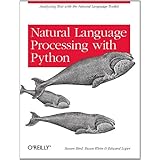
Natural Language Processing with Python Review

Natural Language Processing with Python
Average Reviews:

(More customer reviews)
Are you looking to buy Natural Language Processing with Python? Here is the right place to find the great deals. we can offer discounts of up to 90% on Natural Language Processing with Python. Check out the link below:

>> Click Here to See Compare Prices and Get the Best Offers

Natural Language Processing with Python ReviewThis book really delivers when it comes to code. It starts with simple tasks using the Python NLTK (Natural Language Toolkit) and builds up from there, teaching you a little bit of Python, a little bit of NLP theory, and delivering much in the way of useful applications. The author takes the time to explain the code and what is going on behind the scenes. He starts with extracting explicit words from documents and builds on that until at the end of the book you are analyzing sentence structure and building feature-based grammars.
This is not, however, an introduction to either the mathematics or information theory of natural language processing. It is not even a tutorial on Python. The book's sole purpose is to help you solve real problems using a common language without necessarily understanding the theory or the language you are using. If you really want to understand Python I suggest Learning Python. It's not as interestng as this book, but it gets the job done. To understand the theory behind natural language processing and also see how algorithms are coded up I suggest An Introduction to Language Processing with Perl and Prolog: An Outline of Theories, Implementation, and Application with Special Consideration of English, French, and German (Cognitive Technologies).
As for this book, I think it makes a great supplement to the other books I mention and also as a recipe book of solutions to real-world problems. I really don't think it is a gentle introduction to Speech and Language Processing (2nd Edition) (Prentice Hall Series in Artificial Intelligence), as it claims to be in the preface. Currently the table of contents is not listed in the product description. I include that next for your convenience:

Chapter 1. Language Processing and Python
Section 1.1. Computing with Language: Texts and Words
Section 1.2. A Closer Look at Python: Texts as Lists of Words
Section 1.3. Computing with Language: Simple Statistics
Section 1.4. Back to Python: Making Decisions and Taking Control
Section 1.5. Automatic Natural Language Understanding
Section 1.6. Summary
Section 1.7. Further Reading
Section 1.8. Exercises
Chapter 2. Accessing Text Corpora and Lexical Resources
Section 2.1. Accessing Text Corpora
Section 2.2. Conditional Frequency Distributions
Section 2.3. More Python: Reusing Code
Section 2.4. Lexical Resources
Section 2.5. WordNet
Section 2.6. Summary
Section 2.7. Further Reading
Section 2.8. Exercises
Chapter 3. Processing Raw Text
Section 3.1. Accessing Text from the Web and from Disk
Section 3.2. Strings: Text Processing at the Lowest Level
Section 3.3. Text Processing with Unicode
Section 3.4. Regular Expressions for Detecting Word Patterns
Section 3.5. Useful Applications of Regular Expressions
Section 3.6. Normalizing Text
Section 3.7. Regular Expressions for Tokenizing Text
Section 3.8. Segmentation
Section 3.9. Formatting: From Lists to Strings
Section 3.10. Summary
Section 3.11. Further Reading
Section 3.12. Exercises
Chapter 4. Writing Structured Programs
Section 4.1. Back to the Basics
Section 4.2. Sequences
Section 4.3. Questions of Style
Section 4.4. Functions: The Foundation of Structured Programming
Section 4.5. Doing More with Functions
Section 4.6. Program Development
Section 4.7. Algorithm Design
Section 4.8. A Sample of Python Libraries
Section 4.9. Summary
Section 4.10. Further Reading
Section 4.11. Exercises
Chapter 5. Categorizing and Tagging Words
Section 5.1. Using a Tagger
Section 5.2. Tagged Corpora
Section 5.3. Mapping Words to Properties Using Python Dictionaries
Section 5.4. Automatic Tagging
Section 5.5. N-Gram Tagging
Section 5.6. Transformation-Based Tagging
Section 5.7. How to Determine the Category of a Word
Section 5.8. Summary
Section 5.9. Further Reading
Section 5.10. Exercises
Chapter 6. Learning to Classify Text
Section 6.1. Supervised Classification
Section 6.2. Further Examples of Supervised Classification
Section 6.3. Evaluation
Section 6.4. Decision Trees
Section 6.5. Naive Bayes Classifiers
Section 6.6. Maximum Entropy Classifiers
Section 6.7. Modeling Linguistic Patterns
Section 6.8. Summary
Section 6.9. Further Reading
Section 6.10. Exercises
Chapter 7. Extracting Information from Text
Section 7.1. Information Extraction
Section 7.2. Chunking
Section 7.3. Developing and Evaluating Chunkers
Section 7.4. Recursion in Linguistic Structure
Section 7.5. Named Entity Recognition
Section 7.6. Relation Extraction
Section 7.7. Summary
Section 7.8. Further Reading
Section 7.9. Exercises
Chapter 8. Analyzing Sentence Structure
Section 8.1. Some Grammatical Dilemmas
Section 8.2. What's the Use of Syntax?
Section 8.3. Context-Free Grammar
Section 8.4. Parsing with Context-Free Grammar
Section 8.5. Dependencies and Dependency Grammar
Section 8.6. Grammar Development
Section 8.7. Summary
Section 8.8. Further Reading
Section 8.9. Exercises
Chapter 9. Building Feature-Based Grammars
Section 9.1. Grammatical Features
Section 9.2. Processing Feature Structures
Section 9.3. Extending a Feature-Based Grammar
Section 9.4. Summary
Section 9.5. Further Reading
Section 9.6. Exercises
Chapter 10. Analyzing the Meaning of Sentences
Section 10.1. Natural Language Understanding
Section 10.2. Propositional Logic
Section 10.3. First-Order Logic
Section 10.4. The Semantics of English Sentences
Section 10.5. Discourse Semantics
Section 10.6. Summary
Section 10.7. Further Reading
Section 10.8. Exercises
Chapter 11. Managing Linguistic Data
Section 11.1. Corpus Structure: A Case Study
Section 11.2. The Life Cycle of a Corpus
Section 11.3. Acquiring Data
Section 11.4. Working with XML
Section 11.5. Working with Toolbox Data
Section 11.6. Describing Language Resources Using OLAC Metadata
Section 11.7. Summary
Section 11.8. Further Reading
Section 11.9. ExercisesNatural Language Processing with Python Overview
This book offers a highly accessible introduction to natural language processing, the field that supports a variety of language technologies, from predictive text and email filtering to automatic summarization and translation. With it, you'll learn how to write Python programs that work with large collections of unstructured text. You'll access richly annotated datasets using a comprehensive range of linguistic data structures, and you'll understand the main algorithms for analyzing the content and structure of written communication. Packed with examples and exercises, Natural Language Processing with Python will help you:

Extract information from unstructured text, either to guess the topic or identify "named entities"
Analyze linguistic structure in text, including parsing and semantic analysis
Access popular linguistic databases, including WordNet and treebanks
Integrate techniques drawn from fields as diverse as linguistics and artificial intelligence
This book will help you gain practical skills in natural language processing using the Python programming language and the Natural Language Toolkit (NLTK) open source library. If you're interested in developing web applications, analyzing multilingual news sources, or documenting endangered languages -- or if you're simply curious to have a programmer's perspective on how human language works -- you'll find Natural Language Processing with Python both fascinating and immensely useful.

Want to learn more information about Natural Language Processing with Python?

>> Click Here to See All Customer Reviews & Ratings Now
Read More...