Showing posts with label diversity. Show all posts

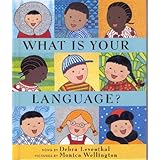
What is Your Language Review

What is Your Language
Average Reviews:

(More customer reviews)
Are you looking to buy What is Your Language? Here is the right place to find the great deals. we can offer discounts of up to 90% on What is Your Language. Check out the link below:

>> Click Here to See Compare Prices and Get the Best Offers

What is Your Language ReviewAlthough it is recommended for ages 4-8, this very simple butcolorful book delighted my 2-year old as well. Not only do they learn"yes" and "no" in several languages, but each new country contains elements of typical culture and dress. French, Spanish, German, Russian, Chinese, Japanese, Swahili, Arabic, and Inuit are all presented - along with "British" English.What is Your Language Overview

Want to learn more information about What is Your Language?

>> Click Here to See All Customer Reviews & Ratings Now
Read More...

Teaching Middle School Language Arts: Incorporating Twenty-first Century Literacies Review

Teaching Middle School Language Arts: Incorporating Twenty-first Century Literacies
Average Reviews:

(More customer reviews)
Are you looking to buy Teaching Middle School Language Arts: Incorporating Twenty-first Century Literacies? Here is the right place to find the great deals. we can offer discounts of up to 90% on Teaching Middle School Language Arts: Incorporating Twenty-first Century Literacies. Check out the link below:

>> Click Here to See Compare Prices and Get the Best Offers

Teaching Middle School Language Arts: Incorporating Twenty-first Century Literacies ReviewI was honored when the author asked me to write a preface for this splendid book. I have been teaching for about 30 years, but I learned a tremendous amount reading it. Ms. Roseboro's concrete examples and illustrations about teaching language arts will help teachers of all ages and subjects. She has learned by doing, by trying creative approaches and then refining the ones that worked the best.
I've always thought that language arts (I teach communication) is one of the most interesting topics to teach. Language arts is about people and relationships, and about stories that can enrich our lives and build common understanding for the good of community and society. Reading this book renewed my love affair with the field. Ms. Roseboro's own enthusiasm is infectious. I can understand why she is an award-winning teacher and a national board certified instructor.
I especially hope that new teachers will consider the ways that Ms. Roseboro has integrated deep pedagogical insights with practical teaching skills. It's easy as a new teacher to get so overwhelmed with daily preparations and classroom activities that one loses track of the theories behind one's instructional approaches. When it comes to teaching language arts with new literacies in mind, this kind of theoretically disconnected teaching becomes very problematic. Teachers fall prey to the latest "media" fads that are both unproven and usually a waste of time.
I'm grateful for Ms. Roseboro's inspiring book. I am honored to have written the preface.
Quentin J. Schultze, Ph.D., author of How to Write Powerful College Student Resumes and Cover Letters: Secrets That Get Job Interviews Like MagicTeaching Middle School Language Arts: Incorporating Twenty-first Century Literacies OverviewTeaching Middle School Language Arts is the first book on teaching middle school language arts for multiple intelligences and related 21st century literacies in technologically and ethnically diverse communities. More than 670,000 middle school teachers (grades six through eight) are responsible for educating nearly 13 million students in public and private schools. Thousands more teachers join these ranks annually, especially in the South and West, where ethnic populations are ballooning. Teachers and administrators seek practical, time-efficient ways of teaching language arts to 21st century adolescents in increasingly multicultural, technologically diverse, socially networked communities. They seek sound understanding, practical advice, and proven strategies for connecting diverse literature to 21st century societies while meeting state and professional standards. Teaching Middle School Language Arts provides strategies and resources that work. Roseboro's book provides an entire academic year of inspiring theory and instruction in multimedia reading, writing, and speaking for the 21st century literacies that are increasingly required in the United States and Canada. An appendix includes supplementary documents to adapt or adopt, and a companion web site is designed to continue communication with readers.

Want to learn more information about Teaching Middle School Language Arts: Incorporating Twenty-first Century Literacies?

>> Click Here to See All Customer Reviews & Ratings Now
Read More...

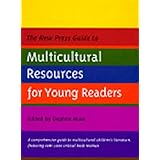
The New Press Guide to Multicultural Resources for Young Readers Review

The New Press Guide to Multicultural Resources for Young Readers
Average Reviews:

(More customer reviews)
Are you looking to buy The New Press Guide to Multicultural Resources for Young Readers? Here is the right place to find the great deals. we can offer discounts of up to 90% on The New Press Guide to Multicultural Resources for Young Readers. Check out the link below:

>> Click Here to See Compare Prices and Get the Best Offers

The New Press Guide to Multicultural Resources for Young Readers ReviewI'm currently enrolled in graduate school, and my field of interest is education. One of the classes I'm taking is about diversity in education, one which I'm enjoying immensely. I myself have a diverse background (Indian-Portuguese) and am married to an Irish Catholic,and our daughter is a living example of the mix of many cultures.So,this book also appealed to me on a personal level. There are so many perspectives on the issues of multiculturalism and diversity, and the number of materials out there is simply mind-boggling. I have found this book to be very useful in gaining insights into multicultural literature for grades K through 8. The book itself is well-organized, and contains over 1,000 critical book reviews on the subject as well as critical essays pertaining to multicultural education.
In brief, here are the chapters contained within the book:
Introduction
Essays included are:
Milestones in Children's Literature
10 Quick Ways to Analyze Children's Books for Racism and Sexism (very useful and insightful)
The All-White World of Children's Books
Chapter One: Who Am I? Who Are We?
Addresses issues of identity and diversity in multicultural children's literature. Book reviews are provided for grades K-8.
Chapter Two: The Family
Very important and timely chapter as it deals with issues pertaining to marriage, siblings, divorce, single parents, blended families, foster care, adoption, and aging. On a personal level, I found Peggy Gillespie's essay, "Other" to be especially pertinent, as it addresses the interracial family and the issues they face.
Chapter Three: Community/Friendship
Covers the issues/themes of community service, cooperation, gangs, conflict resolution, and homelessness. Great ideas such as starting a literary club at school are also addressed.
Chapter Four: Cultural Traditions
Besides covering the different cultural traditions such as found in the Muslim, Christian, Jewish tradition, etc, this chapter has lots of information such as a segment on "Teaching Respect for Native Peoples", and insightful essays, such as "Ethnic and Gender Stereotyping in Disney Animation".
Chapter Five: Folktales, Fairy Tales, and Legends: Fantasy and Imagination
Besides offering critical reviews of multicultural books in this genre, there are also interesting essays such as "Public Libraries: Cultural Repositories for Everyone's Stories" by Rose E. Warder.
Chapter Six: Newcomers Establishing Roots
Discusses how children come to grips with issues of isolation and language barriers, and how these themes can be integrated in the classroom context.
Chapter Seven: Justice, Human Rights, Equity
Discusses how literature can have a powerful impact in enabling children to recreate the world for themselves and future generations. Also stresses the importance of children learning to identify bias within books, research information, and analyze data, which is part of developing their cognitive skills in terms of abstract and critical thinking.
Chapter Eight: Building Cross-Cultural Relationships
Essays included provide useful strategies for developing community of learners in schools, and tips on using multicultural materials effectively (themes covered include biracial/interracial relationships, second language acquisition, unlearning stereotypes, and sharing cultural traditions).
There is a comprehensive index at the end.
Highly recommended resource for multicultural education Grades K-8.The New Press Guide to Multicultural Resources for Young Readers Overview

Want to learn more information about The New Press Guide to Multicultural Resources for Young Readers?

>> Click Here to See All Customer Reviews & Ratings Now
Read More...